
A brightening moisturizer should do more than create temporary shine.
The right formula supports hydration, skin barrier function, texture, and the appearance of uneven tone. It should also fit your routine. Every day. Without unnecessary complexity.
No product can erase every mark overnight. No responsible brand should promise that.
Here are 10 things to know before choosing your next face moisturizer.
1. “Brightening” does not mean bleaching
In skincare, brightening usually means improving the appearance of dullness, discoloration, and uneven tone. It does not mean changing your natural skin color.
Uneven tone can come from several sources:
- Sun exposure
- Post-blemish marks
- Hormonal changes
- Dryness and dehydration
- Irritation
- Normal variation in pigmentation
- Visible texture that reflects light unevenly
The goal is a more balanced-looking complexion. Not an artificial one.
A good brightening moisturizer supports the skin’s normal renewal process while helping reduce the look of dullness and dark spots over time.
2. Ingredient lists matter more than marketing claims
The best face cream for brightening is not necessarily the one with the longest ingredient list. Look for ingredients with clear functions and reasonable evidence.
Key ingredients include vitamin C, niacinamide, vitamin A or retinol, vitamin E, and hyaluronic acid. Each works differently.
Some target pigmentation. Some defend against environmental stressors. Some improve hydration and comfort.
The formula matters. So does how consistently you can use it.
3. Vitamin C helps defend and brighten
Vitamin C is an antioxidant. It helps neutralize free radicals created by environmental stressors, including UV exposure and pollution.
Topical vitamin C may also help improve the appearance of dark spots by influencing melanin production. With consistent use, it can support a more even-looking complexion and smoother visual texture.
There is one important detail: vitamin C is not a substitute for sunscreen.
Think of it as support. Apply your brightening product, then use broad-spectrum SPF 30 or higher during the day.
Vitamin C can be useful in a face moisturizer, especially when the formula is stable and comfortable enough to use consistently.
4. Niacinamide supports tone and the skin barrier
Niacinamide is vitamin B3. It is one of the more versatile ingredients in modern skincare.
Research suggests that niacinamide can help improve the appearance of uneven tone, redness, and dark spots. It also supports the skin barrier, which helps reduce moisture loss and improve overall comfort.
This matters because an irritated barrier can make skin look rough, dull, or more uneven. In some people, irritation can also contribute to post-inflammatory marks.
A moisturizer with niacinamide can be a practical option for sensitive, oily, dry, or combination skin. It supports function without requiring a complicated routine.
Simple works.
5. Retinol works through skin renewal
Retinol is a vitamin A derivative. It is one of the most studied cosmetic ingredients for improving the appearance of fine lines, texture, dark spots, and uneven tone.
It works gradually. Retinol supports skin renewal and can help reduce the buildup of dull, pigmented surface cells. Over time, this may make skin look smoother and more uniform.
Retinol is also easy to misuse.
Start with a small amount two or three nights per week. Increase gradually if your skin tolerates it. Avoid using it on visibly irritated or damaged skin.
Always use sunscreen in the morning. Retinol routines and sun protection belong together.
If you are pregnant, trying to become pregnant, or breastfeeding, speak with a qualified healthcare professional before using retinoid products.
6. Vitamin E helps support comfort
Vitamin E is an antioxidant and emollient. In a moisturizer, it can help condition the skin and support a softer, more comfortable feel.
It is also commonly paired with vitamin C. The combination makes sense from a formulation perspective: both ingredients help address oxidative stress, while vitamin E also contributes to the moisturizing experience.
Vitamin E does not work as an instant dark-spot eraser. Its value is broader.
Comfort matters. A formula that supports the barrier is easier to keep using. Consistency drives results.
7. Hyaluronic acid improves hydration and visible plumpness
Hyaluronic acid is a humectant. It attracts and holds water near the skin’s surface.
That added hydration can make skin look smoother and temporarily plumper. It can also reduce the dry, tight appearance that makes a complexion look dull.
Hyaluronic acid does not directly remove pigmentation. It improves the conditions around your active ingredients by supporting hydration.
This is especially useful in a retinol cream. A well-hydrated routine may feel more comfortable than a harsh, overly active one.
Hydration first. Then performance.
8. Combination formulas can simplify your routine
You do not need a separate product for every skin concern.
A well-designed formula can combine several functions:
- Vitamin A to support renewal
- Vitamin B to support the barrier and tone
- Vitamin C to provide antioxidant support
- Vitamin E to condition and protect
- Hyaluronic acid to hydrate
- Collagen to support the skin’s moisturized, cushioned feel
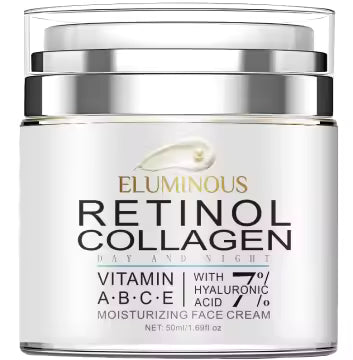
The Eluminous Retinol Collagen Moisturizing Face Cream is built around this type of multi-function approach. Its Vitamin A, B, C, and E complex is designed to brighten the look of dull skin, support a more even-looking tone, and help protect against environmental stressors.
It also combines retinol and collagen. Retinol targets the appearance of fine lines, uneven texture, and discoloration over time. Topical collagen does not replace the collagen produced deeper in the skin, but it can contribute to the formula’s conditioning and moisturizing feel.
Eluminous describes the formula as fragrance-free and clinically tested. That makes it a reasonable option for someone looking for clinically tested skincare with a direct, everyday format.
It is not a miracle cream. It is an active moisturizer designed to work within a consistent routine.

9. Results take time
A brightening moisturizer will not produce the same timeline for every person. Skin type, the cause of discoloration, product strength, sun exposure, and consistency all matter.
A realistic general timeline looks like this:
The first week
Hydration may improve first. Skin can feel softer and look more refreshed.
This is mostly a moisture effect. It is not the same as fading a dark spot.
Two to four weeks
You may notice smoother texture and less visible dullness. Some people also see an early improvement in overall radiance.
Do not judge a retinol product too quickly. Skin renewal takes time.
Six to eight weeks
More noticeable changes in the appearance of uneven tone, texture, and some dark spots may become visible with consistent use.
Eight to twelve weeks
Stubborn post-blemish marks and deeper discoloration may require longer. Some concerns may need professional assessment or a treatment plan beyond an over-the-counter moisturizer.
Take progress photos once every four weeks. Daily mirror checks are unreliable.
10. SPF determines how far your brightening routine goes
This is the non-negotiable step.
UV exposure can deepen dark spots and create new uneven pigmentation. It can also work against the progress made by vitamin C, niacinamide, and retinol.
Use a broad-spectrum SPF 30 or higher every morning. Apply enough product to cover the face, ears, neck, and other exposed areas. Reapply when spending extended time outdoors, sweating, or swimming.
For persistent pigmentation, tinted sunscreen may offer additional protection from visible light, which can contribute to discoloration for some skin tones.
A brightening moisturizer without daily SPF is an incomplete routine.
How to use a brightening moisturizer
If your product contains retinol, evening use is the simplest starting point.
- Cleanse gently.
- Allow skin to dry fully.
- Apply a small amount of the moisturizer.
- Avoid the immediate eye area and corners of the nose.
- Start two or three nights per week.
- Increase use as your skin adjusts.
- Apply broad-spectrum SPF the next morning.
Do not introduce multiple new active products at once. If you add retinol, give your skin time to respond before adding exfoliating acids or strong treatments.
If you experience persistent burning, swelling, severe peeling, or a rash, stop using the product and seek professional advice.
The bottom line
A brightening moisturizer should be practical, evidence-aware, and easy to use.
Look for ingredients that each serve a purpose:
- Vitamin C for antioxidant and brightening support
- Niacinamide for tone and barrier function
- Retinol for renewal, texture, and the appearance of fine lines
- Vitamin E for conditioning and antioxidant support
- Hyaluronic acid for hydration
- Collagen for a smoother, more moisturized skin feel
The Eluminous Retinol Collagen Moisturizing Face Cream brings these ideas into one fragrance-free, clinically tested formula. It can be a useful choice if you want a retinol cream that also functions as an everyday face moisturizer.
Keep expectations realistic. Use it consistently. Protect your skin from the sun.
No hype. Just the essentials.
For more ingredient and routine guidance, review the American Academy of Dermatology’s advice on retinoids and retinol and its guidance on fading dark spots.
#eluminousbeauty #eluminousglowsquad


