
Pimple patches are everywhere. Clear dots. Colorful stars. Hearts that glow in the dark.
The trend is fun. The science is practical.
But are pimple patches still worth using?
Yes : when you use them for the right kind of breakout. Hydrocolloid patches can protect a blemish, absorb fluid, and reduce picking. They can support healing for surface-level pimples.
They are not a cure for acne. They are not a replacement for a complete skincare routine. They are a focused tool.
Simple. Functional. No hype.
What Are Pimple Patches?
Most traditional pimple patches are made with hydrocolloid. It is the same type of moisture-absorbing dressing used in wound care.
Applied to a pimple, hydrocolloid creates a sealed, protective layer over the skin. It helps:
- Absorb fluid from a whitehead or open blemish.
- Maintain a moist environment that supports skin repair.
- Protect the area from dirt, friction, and makeup.
- Stop your fingers from picking at the spot.
- Reduce the chance of additional irritation caused by touching.
The patch may turn white or opaque as it absorbs moisture. That is not the patch “pulling out” every impurity from your pore. It is absorbing fluid at the skin’s surface.
That distinction matters.
Hydrocolloid can help manage an individual blemish. It does not unclog every pore or address all the causes of acne.
How Hydrocolloid Patches Actually Work
A whitehead or pustule contains fluid close to the skin’s surface. That makes it a strong candidate for a hydrocolloid patch.
When the patch contacts moisture from the blemish, the hydrocolloid material forms a soft gel. This helps keep the area covered while the skin repairs itself.
The patch also creates a physical barrier. This is one of its most useful functions.
Picking can increase inflammation and damage the surrounding skin. It can also increase the risk of post-inflammatory hyperpigmentation, especially when the skin is already irritated. A patch gives you a simple reminder: leave the spot alone.
A 2024 randomized clinical trial published in the Journal of the American Academy of Dermatology found that hydrocolloid patches improved the appearance of certain acne lesions over several days. The strongest results were seen with lesions that were open or producing fluid.
The evidence is promising. It is also limited. Studies are generally small and short-term.
The honest conclusion: hydrocolloid patches can help specific pimples heal and look better. They do not treat acne as a whole.
When Pimple Patches Help
Pimple patches are most useful for breakouts that are:
- Surface-level.
- Fluid-filled.
- Open after accidental picking.
- Small whiteheads or pustules.
- Irritated by frequent touching.
They can also help when your main problem is behavior. If you know you will pick at a blemish while working, sleeping, or getting ready, a patch adds a protective layer.
This is skincare for sensitive skin in a practical form. Not because every patch works for every person. Because covering one irritated area may be gentler than repeatedly touching it, squeezing it, or applying several strong spot treatments.
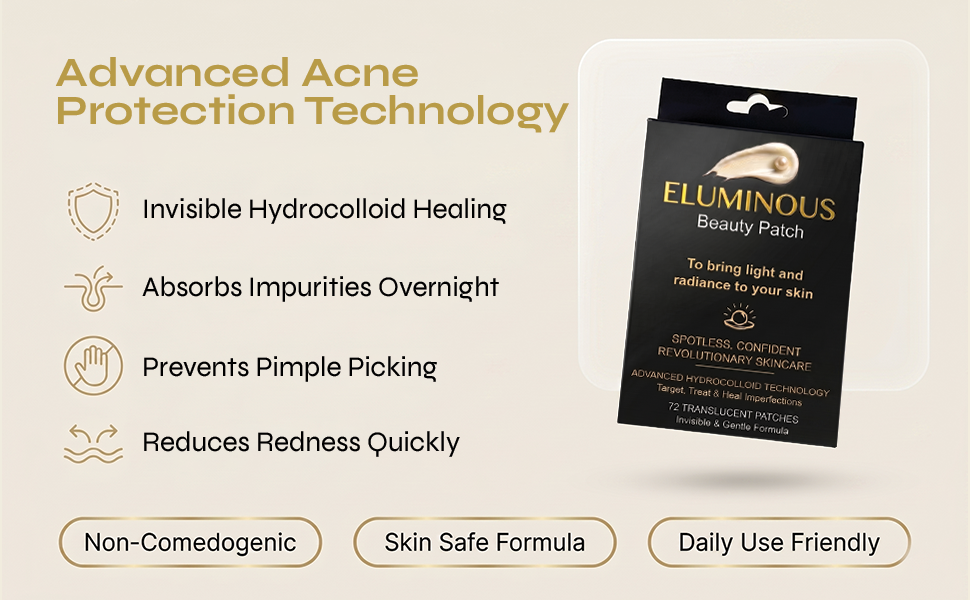
The Eluminous Beauty Clear Pimple Patches are designed for this type of use. The pack includes 72 patches in assorted sizes. The patches are thin, discreet, and designed for daytime or overnight wear. Apply one to clean, fully dry skin and leave it on for approximately 6–8 hours or overnight.
The goal is simple: cover the spot. Leave it alone. Let the patch do its job.
When Pimple Patches Do Not Help Much
Hydrocolloid patches are not designed to treat every form of acne.
They usually have limited impact on:
- Deep cysts.
- Nodules.
- Blackheads.
- Closed comedones.
- Widespread hormonal acne.
- Breakouts without surface fluid.
A deep, painful blemish sits below the surface of the skin. A hydrocolloid patch cannot reach that inflammation. It may still stop you from touching the area, but it is unlikely to resolve the breakout by itself.
Blackheads and closed comedones are different, too. They involve clogged follicles rather than a surface wound that can release fluid into a patch.
For ongoing acne, a broader routine may include ingredients such as retinoids, benzoyl peroxide, or salicylic acid. A dermatologist can help determine which approach fits your skin.
Patches are spot care. Not total acne care.
Clear Patches vs. Medicated Patches
Modern pimple patches come in several formats.
Clear Hydrocolloid Patches
Clear patches are made for discreet use. They can be worn during the day, at night, or under makeup, depending on the product and how well it adheres.
They are a good choice when you want practical coverage without drawing attention to the blemish.
Eluminous Beauty Clear Pimple Patches use an ultra-thin hydrocolloid design with easy-peel tabs. The formula is fragrance-free and focused on barrier protection rather than an overloaded blend of actives.
That simplicity can be useful for people building a routine around skincare for sensitive skin.
Medicated Patches
Some patches contain active ingredients such as salicylic acid. These may offer additional spot-treatment benefits, but they can also increase the chance of stinging, dryness, or irritation.
More ingredients do not automatically mean better results.
If your skin is reactive, start with plain hydrocolloid. Patch-test first. Stop if you experience burning, persistent redness, or a rash.
Microneedle or Dissolving Patches
Some modern patches use tiny dissolving projections designed to deliver ingredients below the surface. These products are marketed for deeper blemishes.
They are different from standard hydrocolloid patches. They also require closer attention to ingredients, wear time, and skin sensitivity.
Read the instructions. Follow them exactly.
The Rise of Star and Heart Patches
Acne care has changed visually.
A pimple patch used to be something people tried to hide. Now, it can be part of the look.
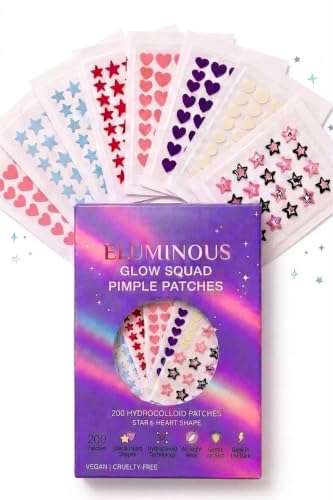
The Eluminous Beauty Star and Heart Pimple Patches use the same basic hydrocolloid concept in visible shapes. The 200-count pack includes stars and hearts in six color varieties, including glow-in-the-dark hearts.
These patches are not a different category of acne treatment just because they are colorful. The shape does not replace the science.
The difference is social.
Visible patches can make acne care feel less secretive. They can help normalize the fact that breakouts happen. They turn a practical treatment into an intentional choice.
Wear the patch. Treat the spot. Move on.
How to Use a Pimple Patch Correctly
Application is basic. The details still matter.
1. Cleanse Gently
Use a gentle cleanser to remove oil, sunscreen, and makeup. Avoid scrubbing the blemish.
2. Dry Completely
Patches adhere best to clean, dry skin. Moisturizer, facial oil, or water under the edge can make the patch lift.
3. Apply Directly to the Spot
Choose a size that fully covers the blemish. Press the patch down for several seconds.
4. Keep Strong Products Around It
Do not apply retinol, exfoliating acids, or benzoyl peroxide underneath a hydrocolloid patch unless the product specifically instructs you to do so.
You can continue your normal routine around the patch. For example, apply a fragrance-free face cream to the rest of your face while keeping the patch area clean and dry.
If you use a retinol cream, such as the Eluminous Retinol Night Cream, apply it to uncovered areas according to the product directions. Do not assume that layering more products under a patch will make it work better.
5. Remove Slowly
Wear the patch for approximately 6–8 hours or overnight, depending on the product instructions. Remove it gently when it becomes white, cloudy, or loose.
Replace it with a fresh patch only if the area still needs protection.
Are Pimple Patches Safe for Sensitive Skin?
Many people tolerate plain hydrocolloid well. It is generally simpler than a patch loaded with multiple active ingredients, fragrance, or essential oils.
Still, the adhesive can irritate some skin types. Repeated removal can also cause friction.
If you have sensitive skin:
- Test one patch on one blemish first.
- Choose fragrance-free, minimal formulas.
- Avoid placing patches over eczema, rashes, or broken skin beyond a superficial blemish.
- Remove the patch slowly.
- Stop using it if you notice burning, swelling, or a spreading rash.
Clinically tested skincare can support better product decisions, but individual skin responses still vary. The best product is one your skin can tolerate consistently.
The Verdict
Pimple patches are still worth it.
Just not for every pimple.
Use hydrocolloid patches for whiteheads, surface-level breakouts, and spots you cannot stop touching. Use clear patches when you want discreet daytime coverage. Use star and heart patches when you want to make acne care visible, practical, and a little more fun.
Do not expect a patch to treat deep cystic acne, blackheads, or widespread breakouts. Do not use it as a substitute for a complete acne routine.
The formula matters. The placement matters. The expectations matter.
Eluminous Beauty keeps the approach direct: clear hydrocolloid patches for discreet protection, star and heart patches for visible confidence, and science-first skincare that does not overpromise.
Cover the spot. Protect the barrier. Let your routine do the rest.
#eluminousbeauty #eluminousglowsquad


